
A Simmons & Wagner DUI Defense Insight
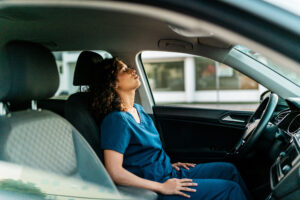
For many Californians, sleeping it off in the car seems like a responsible alternative to driving after drinking. You might think you’re doing the right thing—protecting yourself and others by choosing not to drive. But here’s the surprising truth: you can still be arrested and charged with DUI even if the car never moved an inch.
At Simmons & Wagner, we defend clients every day who made a responsible choice but still found themselves facing life-altering criminal charges. Understanding how these cases work—and why they happen—is the first step toward protecting your rights.
This blog breaks down what prosecutors look for, how “actual physical control” is interpreted in California, and how our attorneys challenge DUI sleeping cases.
What Does It Mean to Be in “Actual Physical Control” of a Vehicle?
California law doesn’t require that you actually drive the vehicle to be charged with DUI. Instead, officers focus on whether you were in “actual physical control” of the car—meaning you had the ability to operate it, even if you didn’t intend to.
Because the law gives officers wide discretion, DUI “sleeping-in-car” cases often rely on circumstantial clues, such as:
- Your position in the vehicle
- Whether the engine was running
- Whether the keys were in the ignition (or anywhere reachable)
- Whether the car was on the side of the road, in a parking lot, or in a driveway
- The warmth of the hood or exhaust
- The time of day and surrounding circumstances
- Your statement to the officer (even casual comments)
The frustrating reality? You can be asleep, parked legally, with no intention of driving—and still be arrested.
Why Keys in the Ignition Matter So Much
In DUI sleeping cases, one factor can drastically influence the outcome: where the car keys are located.
Keys in the Ignition (Engine On or Off)
Courts often treat this as strong evidence of “intent to drive,” even if the car never moved.
The logic: if the keys are in the ignition, the car is ready to be driven at any moment.
Keys in Your Hand or Lap
Still risky. Prosecutors may argue that you were about to start the vehicle or had recently driven it.
Keys in the Cupholder or Passenger Seat
Less incriminating, but still accessible—which may still be interpreted as having control.
Keys in the Trunk or Locked Away
Much safer. This shows a deliberate choice not to drive.
Keyless Push-Start Vehicles
Even trickier. As long as the fob is inside the vehicle, prosecutors may argue you had the ability to start the car immediately—making “actual physical control” easier to prove.
Your Location in the Car Is a Major Factor
Where you were sitting matters just as much as where the keys were.
Driver’s Seat (Even Reclined & Asleep)
This is the most incriminating position. Police and prosecutors often argue that being in the driver’s seat shows intent to drive, even if you were trying to rest.
Passenger Seat
Safer than the driver’s seat, but still not perfect. Prosecutors may claim you moved seats after driving.
Back Seat
This is the safest place to sleep. Courts often view this as evidence you were not intending to operate the vehicle.
Still, nothing is guaranteed—officers can and do make arrests regardless of where you sit.
Engine Running vs. Engine Off
Engine Running (Even for Heat or A/C)
If the engine is on, police almost always assume the person is driving or intending to drive, even if the car is parked.
Engine Off but Hood Warm
Officers may claim the car was driven recently—this can be used as circumstantial evidence.
Engine Off & Car Cold
This is ideal for defense. It suggests no recent operation and little ability to drive.
Where You Parked Makes a Big Difference
Parked on the Side of the Road
Risky. Officers may assume you pulled over because you were impaired while driving.
Parked Legally in a Private Lot or Outside a Bar/Restaurant
Better, but officers may still argue intent if other factors point that way.
Parked in Your Driveway
Often the best scenario for defense—unless the car is running or you’re in the driver’s seat with keys accessible.
How Prosecutors Try to Prove a Sleeping DUI
Prosecutors typically rely on a combination of:
- Circumstantial evidence (car location, key placement)
- Officer observations
- Statements like “I just parked to sleep,” which can be used against you
- Breathalyzer or chemical test results
- Signs of intoxication (odor, slurred speech, etc.)
The burden is on the prosecution to show you had both the ability and intent to operate the vehicle. Simmons & Wagner challenges this aggressively.
How Simmons & Wagner Fights Sleeping-in-Car DUI Charges
These cases are extremely defensible when handled correctly. Our strategies include:
1. Arguing lack of intent to drive
We show that your actions demonstrated responsible behavior, not recklessness.
2. Challenging probable cause
Officers often lack the legal grounds to initiate the contact or arrest in the first place.
3. Showing the car was never in operation
We analyze engine temperature, timestamps, location evidence, and more.
4. Demonstrating a safe alternative purpose for being in the car
Sleeping, waiting for a ride, charging your phone, or seeking shelter are all valid reasons.
5. Highlighting improper police assumptions
Many arrests stem solely from guesswork rather than evidence.
6. Examining bodycam and dashcam footage
This often contradicts officer reports or shows “control” was never established.
7. Suppressing statements you made while half-asleep or confused
These statements are frequently taken out of context or gathered improperly.
The Bottom Line: Yes, You Can Get a DUI for Sleeping in Your Car — But You Also Have Defenses
The surprising—and frustrating—truth is that you can be charged with DUI in California even if you were only sleeping in your vehicle. But that doesn’t mean you’re guilty. These cases are highly fact-dependent and often flimsy.
With the right defense, they are among the most beatable types of DUI cases.
Arrested for Sleeping in Your Car? Get the Defense You Deserve.
If you or someone you know was arrested while sleeping in a car, contact Simmons & Wagner immediately. These cases require fast action, strategic legal defense, and an attorney who knows how to dismantle the prosecution’s assumptions.
Simmons & Wagner is ready to fight for your freedom, your record, and your future.