
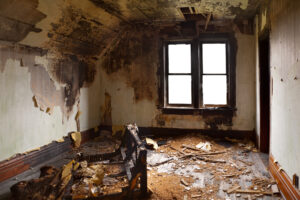
 Arson charges are among the most serious criminal accusations a person can face. Beyond the risk of lengthy prison sentences, these cases carry a powerful stigma that can affect employment, housing, and personal relationships long before a verdict is reached. Yet despite their gravity, arson cases are frequently built on investigative methods and assumptions that are far less reliable than many people realize.
Modern fire science has revealed that many traditional arson indicators are flawed, misunderstood, or outright discredited—making careful legal scrutiny essential in these cases.
The Evolution of Fire Science
For decades, fire investigators relied on visual cues to determine whether a fire was intentionally set. Burn patterns, char depth, melted materials, and structural damage were often interpreted as proof of accelerants or deliberate ignition.
However, advances in fire science have shown that many of these indicators can occur naturally in accidental fires. Flashover events, ventilation patterns, and modern building materials can produce burn characteristics that closely resemble what investigators once believed were signs of arson.
When outdated assumptions are used, innocent people can be accused based on science that no longer holds up.
Misinterpreting Burn Patterns
One of the most common sources of error in arson investigations involves burn patterns on floors and walls. Patterns once attributed to accelerant use may actually result from heat buildup, airflow changes, or the collapse of burning materials.
Without a full understanding of fire dynamics, investigators may incorrectly conclude that a fire was intentionally started. Defense attorneys must often bring in qualified fire science experts to explain how these patterns can form in accidental fires.
Accelerant Evidence Isn’t Always What It Seems
The presence of chemicals associated with accelerants does not automatically mean arson occurred. Many household products—cleaners, adhesives, fuels, and even certain building materials—can leave residues similar to accelerants.
Improper collection, contamination, or misinterpretation of samples can lead to false conclusions. Challenging how evidence was gathered and analyzed is a critical part of defending arson allegations.
Intent Is a Legal Requirement
Even if a fire’s origin is suspicious, prosecutors must still prove intent. Accidental fires, electrical failures, mechanical malfunctions, and human error are not crimes.
Establishing intent often relies on circumstantial evidence, such as financial stress, insurance claims, or prior disputes. These narratives can be misleading when taken out of context and must be examined carefully to prevent assumptions from replacing proof.
Early Conclusions Can Shape the Entire Case
Once investigators label a fire as arson, that conclusion often influences every step that follows. Witness statements, evidence interpretation, and charging decisions may all be filtered through that initial assumption.
This confirmation bias can make it difficult for alternative explanations to be considered, even when they are supported by facts. Effective defense requires dismantling these early assumptions and forcing a reevaluation of the evidence.
Why Expert Analysis Matters
Arson cases are highly technical. Successful defense often depends on working with fire science experts who understand modern standards and can identify investigative errors.
These experts can challenge prosecution theories, explain alternative causes, and expose reliance on outdated or unreliable methods.
Protecting Your Rights in High-Stakes Cases
At Simmons Wagner, LLP, arson defense begins with a detailed review of the investigation itself. Every assumption, test result, and conclusion is examined to ensure it is supported by sound science and constitutional procedures.
When lives and futures are on the line, no allegation should go unchallenged.
If you are facing arson charges or believe you are under investigation, contact Simmons Wagner, LLP at (949) 439-5857 immediately. Early legal intervention can make the difference between a narrative built on assumptions and a defense grounded in facts and modern fire science.